

Conventional Mesh vs ESE Systems for Structural Lightning Protection
A technical evaluation of Franklin rod mesh arrays versus Early Streamer Emission technology under IEC 62305 and NFC 17-102 standards.
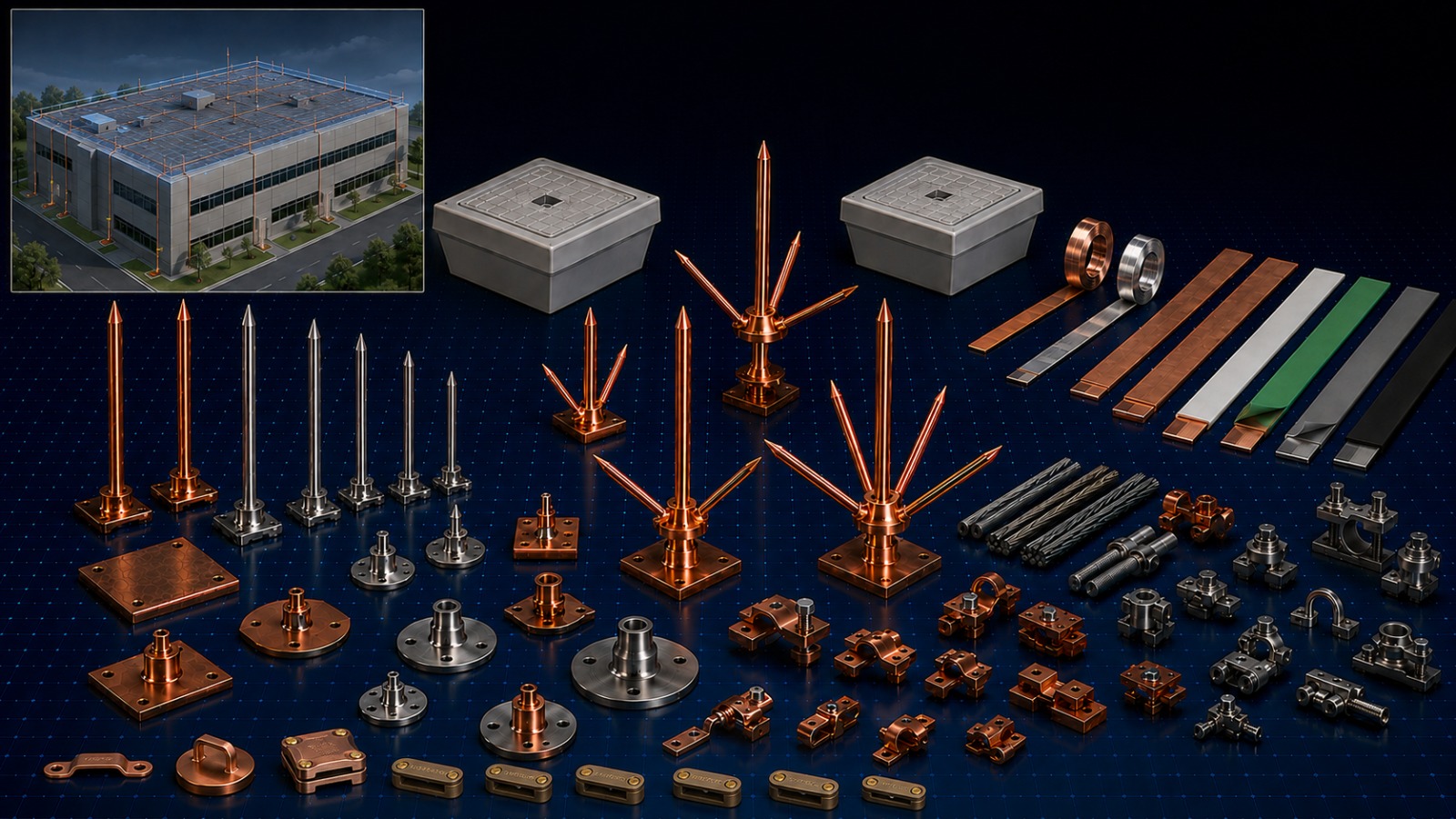
Structural lightning protection in the United Arab Emirates requires strict adherence to international safety codes, primarily IEC/BS EN 62305 and NF C 17-102. Given the high-rise architectural landscape and harsh coastal environmental conditions across Abu Dhabi, Dubai, and Ras Al Khaimah, selecting high-grade materials—such as electrolytic copper, stainless steel 316L, and hot-dip galvanized steel—is paramount to ensure long-term structural integrity.
Conventional Franklin rod protection systems rely on Faraday cage principles. They incorporate air terminals, roof conductor mesh, continuous down conductors, test joints, and a coordinated earth termination network. This method is ideal for structures requiring multiple controlled discharge paths for lightning energy.
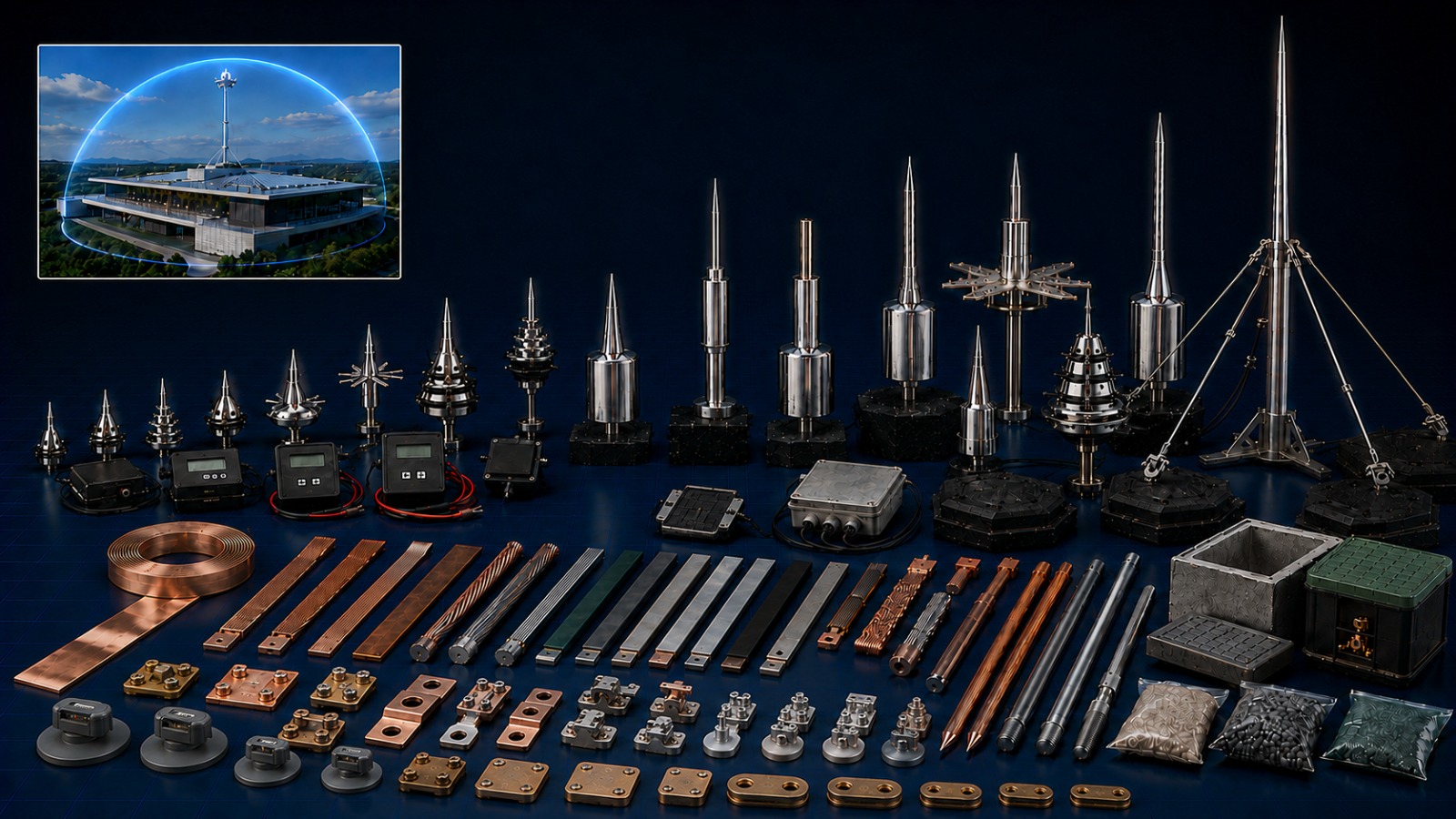
In contrast, Early Streamer Emission (ESE) technology utilizes an ionized streamer launch mechanism to capture strikes from an elevated position. This significantly extends the protection radius (up to 107 meters depending on the protection level), offering an efficient solution for large open roof areas, warehouses, and complex architectural geometries.
Vision Energy International provides complete engineering support, material supply, site installation, and continuity testing for compliant external lightning protection systems across commercial, industrial, and infrastructure facilities.